
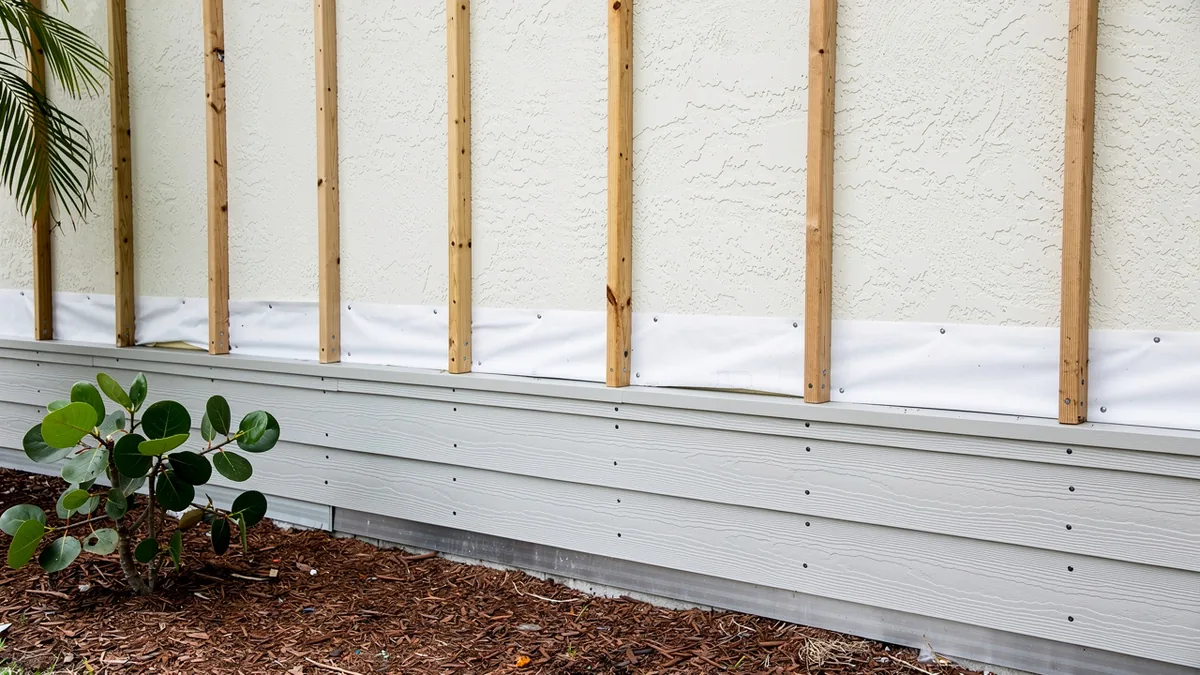
Plenty of homeowners in Cooper City and across Broward look at a stucco house and wonder whether lap siding could give it a fresh look. It can be done. What it cannot be is siding nailed straight onto the stucco. A stucco wall is hard, uneven and not something a siding nail can hold in, so the job is really about building a proper base over it first. Here is what that involves and when it is not worth doing.
Know what is behind your stucco
Stucco is a finish, not a structure. In South Florida it is most often applied over concrete block, though some houses, additions and second floors are wood frame with stucco over metal lath.
The difference decides everything that follows. On block, fasteners have to go through the stucco and into the masonry with anchors made for concrete. On frame, they have to find the studs behind the lath. A quick look at the house plans, the attic or an outlet box on an outside wall usually tells you which you have. Some houses have both, with block on the ground floor and a frame addition or second story above, and each part is handled its own way.
Why siding cannot go straight onto stucco
Siding needs a flat, solid surface to fasten into. The Vinyl Siding Institute's installation checklist, for example, calls for fasteners that penetrate at least 1 1/4 inches into a nailable substrate. Stucco is neither nailable nor reliably flat, and nails driven into it crack the finish and hold poorly.
There is also water to think about. Rain that gets behind siding needs a way down and out. Pressed tight against stucco, it has nowhere to go. Adhesives are no shortcut either. Glue is not a tested way to hold siding against hurricane wind loads, and it seals moisture against the wall.
Furring strips and a drainage gap
The usual approach is to fasten furring strips over the stucco, into the block or framing, at the spacing the siding manufacturer specifies. Pressure-treated wood is common, and some installers use composite or metal furring. The strips give the siding a straight, solid base and leave a small cavity behind it where water can drain and air can move.
A water-resistive barrier goes on before or over the furring, depending on the system, and the bottom of the cavity is left open with a screen to keep insects out.
Windows, doors and the extra depth
Furring and siding together add depth to the wall, so the windows end up recessed. Every opening needs new trim and flashing built out to the new face, and jamb extensions where the look calls for them.
Light fixtures, hose bibs, the electric meter and dryer vents all have to be extended as well. These details take time and are where a stucco-to-siding job is most likely to leak if they are rushed.
Wind loads and approvals in Broward
Cooper City is in Broward County, inside the Florida Building Code's High-Velocity Hurricane Zone. The siding has to carry an approval for that zone, and the approval describes what it may be fastened to and how.
That matters here because not every approval covers siding on furring over masonry. If yours does not, the building department may ask for an engineered attachment design. Confirm the requirements with the city's building department before you commit to a product.
When it is a bad idea
Siding over stucco is the wrong move when:
- The stucco is cracked and water has already reached frame walls behind it. Covering it hides rot that keeps spreading.
- The house has active termite problems that have not been treated.
- Deed restrictions or a homeowners association limit exterior materials. Check before you spend on design.
- The goal is only a fresher look, and repairing and repainting the stucco would get you there for much less.
Partial cladding as a middle ground
Many owners do not side the whole house. Cladding a front gable, an entry bump-out or one prominent wall with lap or panel siding changes the look of a stucco home at a fraction of the work. The same furring, flashing and approval rules apply to that section, and the joint where siding meets stucco needs careful trim and flashing.
Should the stucco come off instead?
Removing stucco from block is slow, loud and messy, and it rarely improves the result. On block walls, cladding over sound stucco is the normal approach. On frame walls with damaged stucco, removal can make sense, because it exposes the sheathing for repair and lets the new siding go on over a proper water barrier.
Getting it right in Cooper City
For local housing, climate and cost information, see our Cooper City siding contractor page. The siding installation page explains how new siding is installed, including the trim and flashing work that a stucco conversion depends on.