Vinyl Siding Installation in Hallandale Beach, FL
Vinyl siding installation in Hallandale Beach, FL is the lightest and most budget-friendly way to clad a frame wall. Done right, it needs no paint and shrugs off rain. Done wrong, it rattles, waves and lets wind get underneath.
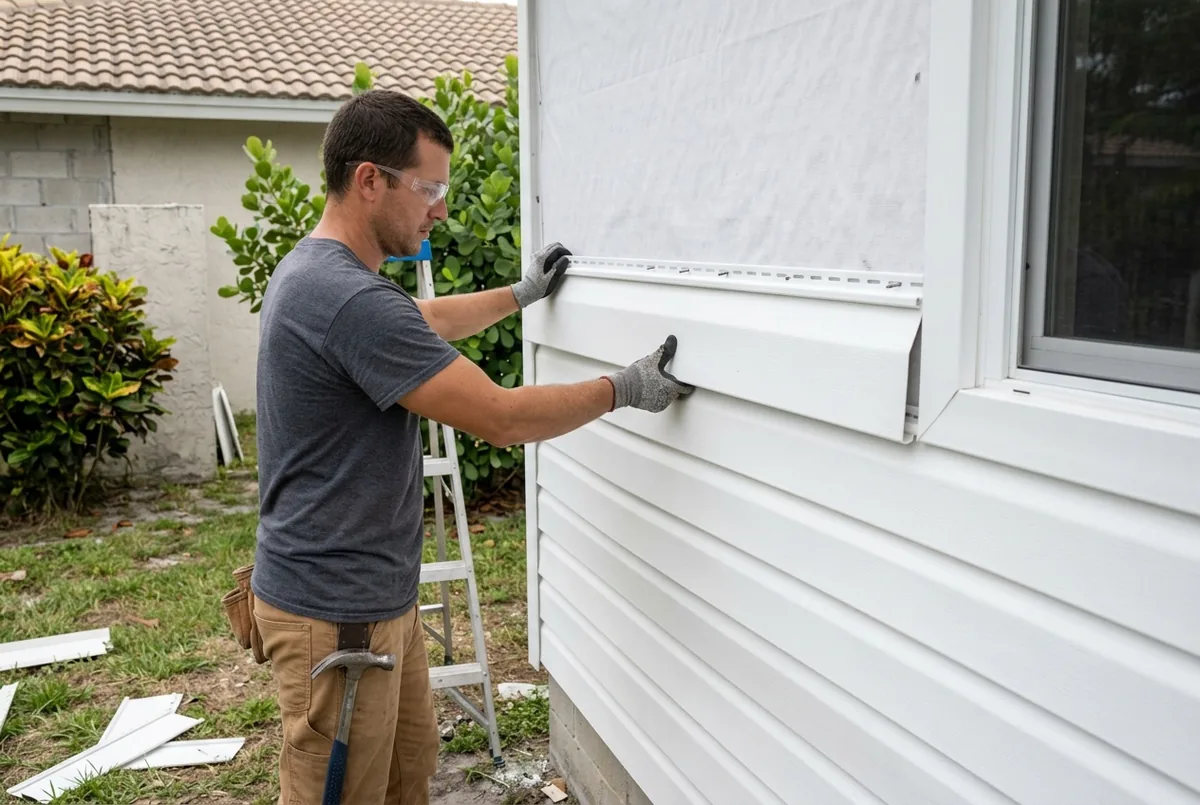
Vinyl siding is made from PVC with stabilisers that help it resist sunlight. It is light enough to go on a second storey without strengthening the frame, it never needs painting and a damaged panel can be swapped out on its own. Those are good reasons it remains one of the most common sidings in the country, and a sensible pick for many additions and frame walls here.
The catch is that vinyl moves. It expands in heat and shrinks when it cools, and every rule in a vinyl installation manual exists to let it do that without tearing loose. In our climate, with strong sun and hurricane winds, those rules matter more than usual. This page covers the problems vinyl solves, the ones a rushed install causes, how we do the work, what it typically costs and what to ask. For other options, see fiber cement siding or the overview of siding installation, and visit PrimeCrest Exteriors, your local siding team in Hallandale Beach, to see everything we offer.
Vinyl siding and the Hallandale Beach climate
Sun is the first thing vinyl has to deal with here. South Florida walls take strong light most of the year, and dark panels absorb more heat than light ones, so they expand more. Reflected sunlight from a neighbour's energy-efficient windows can concentrate enough heat to distort vinyl, a known problem on closely spaced lots. A Hallandale Beach vinyl siding installation therefore starts with colour and placement, not only price. Lighter shades and heat-resistant panel lines are worth a look on walls that face west or sit across from large windows.
Wind is the second. Broward County falls inside the Florida Building Code's high-velocity hurricane zone, where siding needs a product approval for that zone. Vinyl panels are tested for the wind pressure they can resist, and the approved ones come with a fastening schedule that is often tighter than the standard manual. Lightweight panels made for milder parts of the country often do not qualify, which is one reason big-box bargains are not always an option on a Broward County house.
Common Problems That Bring People to Vinyl Siding
Some requests for vinyl siding installation in Hallandale Beach are about a wall that needs cladding for the first time. Others come from a vinyl job somebody else installed that is already misbehaving. Both groups share the same short list.
Signs to look for
- A frame addition or enclosed porch that still needs a low-maintenance exterior.
- Painted wood siding you are tired of scraping and repainting every few summers.
- Existing vinyl that ripples, bows or has panels pulled tight against the corners.
- Panels that rattle in a breeze or have unlocked and lifted after a storm.
- Melted or warped spots on a wall that faces a neighbour's windows.
- Chalky, faded or cracked panels on the sunniest side of the house.
What causes vinyl to fail
Waves and buckles come from panels nailed tight or butted hard against corner posts and J-channel, leaving no room to expand. Rattling and blow-offs come from nails spaced too far apart, missed nailing slots or panels that were never locked into the course below. Distortion comes from concentrated heat. Fading and brittleness come from age and sun, and cracked panels are often the result of flying debris in a storm. Behind the panels, missing flashing at windows lets rain soak the sheathing, because vinyl is a rain screen, not a waterproof skin.
Fix the panels or redo the wall?
Loose or cracked panels can often be unlocked and refastened or replaced one at a time. Waves caused by tight nailing can sometimes be relieved by backing the nails out slightly. When the whole wall was nailed wrong, the fastening does not meet the approval or the water barrier behind it is missing, the reliable fix is to take the panels down and install them again correctly.
What Does Vinyl Siding Installation Involve?
Vinyl goes up quickly compared with heavier sidings, and on a vinyl siding installation in Hallandale Beach that speed is where most mistakes begin. These are the parts of the job that decide whether it stays flat and tight.
Inspection and product selection
We check the sheathing and framing, note which walls get the harshest sun and look for nearby windows that could reflect heat. Then we narrow the choice to panels approved for the high-velocity hurricane zone, in a profile and colour that suit the wall.
Water barrier and flashing
Vinyl lets some water past its laps by design, so the layer behind it does the waterproofing. A water-resistive barrier is lapped shingle-style over the sheathing, and windows, doors and roof edges are flashed to send water back out over the panels.
Starter strip and receivers
A level starter strip sets the first course. Outside and inside corner posts, J-channel around windows and doors and utility trim under soffits are installed next. These are the pieces each panel slides into, and they are what hide the expansion gaps.
Hanging panels so they can move
Each panel locks into the one below and is nailed in the centre of its slots, with a small gap under the nail head so it can slide. Panels stop short of corner posts and channels to leave room for expansion, and laps face away from the main view. Nails are never driven through the face of the panel.
Fastening for wind
The approval for the hurricane zone sets the nail type, length and spacing, and we follow it rather than the general manual where they differ. Fasteners are corrosion-resistant and long enough to reach solid framing or sheathing, so panels stay locked when storm winds pull at them.
What to expect at home
Vinyl is quiet compared with fiber cement. There is little dust and the cutting is mostly snips and a fine-tooth saw. Expect ladders and staging along the work side and a few days on a typical addition. When it is done, a garden hose and a soft brush are all the upkeep it needs.
How Much Does Vinyl Siding Installation Cost?
Vinyl is usually the least expensive siding to buy and install, and it never needs a paint budget afterwards. These national figures from published cost research show the typical spread before your walls are measured.
| What | National range |
|---|---|
| Typical vinyl siding project | $6,000–$24,000 per project |
| Vinyl siding, installed | $3–$12 per square foot |
What changes the price
The size of the walls matters most. Thicker and insulated panels cost more than standard ones, and premium profiles such as board and batten or shakes cost more than plain lap. Dark, fade-resistant colours carry a premium. Corners, windows and soffits add trim. A hurricane-zone approval may narrow the product list and add fasteners, and permit fees and sheathing repairs complete the picture.
These are national ranges, not a quote. What vinyl siding installation in Hallandale Beach costs for your home depends on the wall area, the panel and the trim, and it is set by an estimate after the walls are measured.
Why Choose PrimeCrest Exteriors Siding Contractor?
Since 2015 we have done one thing from our base in Hallandale Beach: siding. Vinyl looks simple, and that is exactly why so many installs go wrong. We hang every panel with room to move and fasten it to the approval, because a wall that waves in August or sheds panels in September is a wall that has to be done twice.
You will know before we start which panel is going up, what trim and flashing the walls need and what could change the price. During the work we flag anything unexpected and wait for your answer. We are open every day from 7am to 10pm and on call 24/7 for emergencies, including panels torn loose by a storm.
Our Vinyl Siding Installation Process
A vinyl wall is only as good as its first course and its fastening. We work through the same five steps on every Hallandale Beach vinyl siding installation, whether it is one porch wall or a full second storey.
Call or send the form
Reach us at (786) 833-8892 or online with your address, the walls involved and any colour ideas.
Walk-around and sun check
We measure, inspect the sheathing and note heat exposure, reflective windows and every opening the panels must meet.
Panel choice and estimate
You pick from approved panels and colours and receive a written scope with the trim, flashing and fastening spelled out.
Wall prep and trim
After any permit is in place, the water barrier, flashing, starter strip, corner posts and channels go on.
Panels, cleanup and review
Panels are hung with expansion room, locked and fastened to the approval, then we clean up and check each wall with you.
Frequently Asked Questions About Vinyl Siding Installation
Is vinyl siding allowed in the high-velocity hurricane zone?
Yes, but only products that carry an approval for that zone. Many vinyl panels sold around the country are not approved for Broward or Miami-Dade, so for any vinyl siding installation in Hallandale Beach the product approval is checked before anything is ordered. The panels are then fastened exactly as that approval requires, even where it calls for more nails than the general manual.
Why does vinyl siding buckle or wave?
Nearly always because it was nailed too tight or left no room to expand. Vinyl grows and shrinks with temperature, so each nail sits in the centre of its slot with a small gap under the head, and panels stop short of corner posts and channels. Pinned panels have nowhere to go on a hot afternoon, so they bow.
How much does vinyl siding installation in Hallandale Beach cost?
National cost research puts a typical vinyl project at $6,000–$24,000, or about $3–$12 per square foot installed. Your price depends on wall area, the panel you pick and the trim involved, so it is set by an estimate after the walls are measured.
Can a damaged vinyl panel be replaced on its own?
Usually, yes. Vinyl panels lock into each other, so a cracked piece can be unlocked with a zip tool, removed and replaced without disturbing the wall around it. Colour match is easiest when a few spare panels from the original order are kept.
How do I clean vinyl siding?
A soft brush, a mild cleaner and a garden hose are all it needs. Work from the bottom up so streaks do not set, then rinse from the top down. Avoid aiming a pressure washer up under the laps, because that drives water behind the panels.
Does vinyl siding fade in the Florida sun?
All vinyl fades somewhat over time, and strong sun speeds it up. Panels are made with UV stabilisers, and lighter colours tend to hold their look longer and move less with heat, which is why they are a common choice on sunny walls.
Request Vinyl Siding Installation in Hallandale Beach
Want a low-maintenance exterior that is fastened for our storms? Call PrimeCrest Exteriors Siding Contractor about vinyl siding installation in Hallandale Beach. Open every day from 7am to 10pm, and on call 24/7 for emergencies.