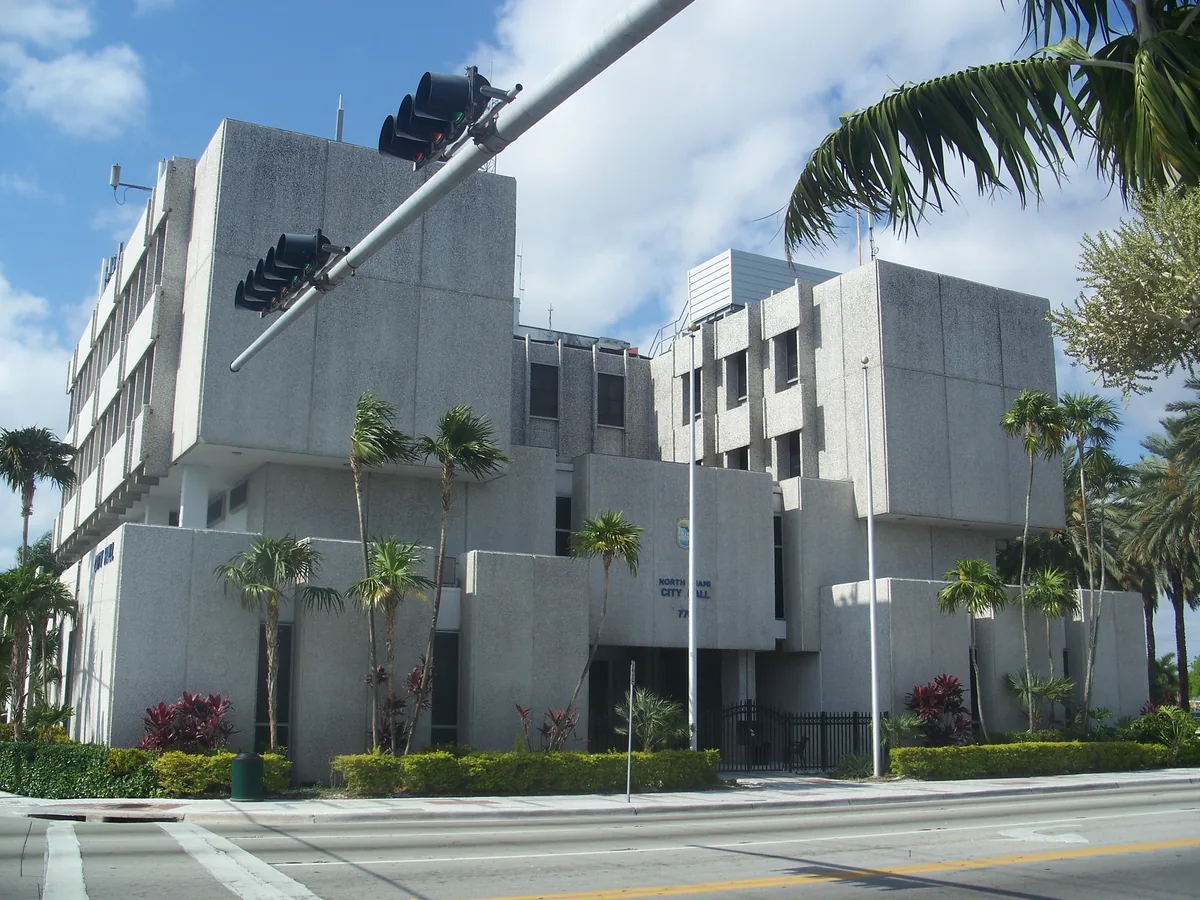
PrimeCrest Exteriors works as a siding contractor in North Miami, from bayside homes in Keystone Point and Sans Souci to the inland streets of Sunkist Grove and Alhambra Heights.
Homes have been going up in North Miami since the 1920s, and the city shows several building eras side by side. Postwar block houses sit next to older frame homes, and many have picked up second storeys, enclosed porches or clad gables along the way. On the bay side, every one of those walls also has to cope with salt in the air.
Our North Miami siding contractor work covers the full range: replacing siding that has rotted or blown loose, cladding additions, moving wood walls over to fiber cement, hanging wind-approved vinyl and fixing the flashing and sheathing underneath. Near the water we pay extra attention to the metal parts of the wall, because that is what salt attacks first.
Select the closest match below to see what normally causes it and the first thing worth doing about it.
Orange streaks below each nail mean the fasteners are corroding, which happens fastest on homes facing the bay or a canal. As the nails thin, boards loosen and the next strong gust can lift them off the wall. Next step: check how much holding power is left, then refasten or replace the siding using stainless or coastal-rated fasteners.
Wood trim takes the brunt of salt air and wind-driven rain, and once the paint film fails the end grain soaks up water and starts to break apart. Patching rarely lasts on a waterside elevation. Next step: replace the failed trim and the boards around it with fiber cement, primed and painted on every face, so the corners stop drinking water.
Panels that bow outward or bind at the ends were pinned too tightly or cut without room to expand, so the summer heat had nowhere to go but out. Next step: release and re-hang the affected runs if they are still flat enough to reuse, or replace them with a Miami-Dade approved panel installed with the correct gaps at every channel.
Enclosing a carport creates exterior walls in a space that never had to keep weather out before. They need sheathing, a weather barrier, flashed window and door openings, and siding that lines up with the courses on the rest of the house. Next step: settle on matching or contrasting siding and allow time for the city permit before any framing goes up.
When paint or drywall bubbles under a window with no plumbing nearby, rain is usually slipping past the window flashing and running down inside the wall. The siding around the opening can look perfectly intact. Next step: remove the siding below the window, check the sill flashing and sheathing, and rebuild the opening so water is turned back outside.
Siding faults do not always look like siding faults. A sticking door, a draft at an outlet or a damp patch in a closet can all begin at the outside wall. Next step: tell us what you have seen and roughly where in the house it is, and the inspection will start on that side of the building.
General siding work starts with finding out why a wall is failing, and in North Miami the answer changes from street to street: salt and corroded metal near the bay, sun and mildew further inland. We check boards, trim, flashing and sheathing, then recommend the smallest repair that fixes the cause. Watch for loose boards, rust stains and caulk split at the corners.
North Miami homes have been extended in every direction, with carports enclosed, porches closed in and second floors added. New frame walls need wrap, flashing, starter, siding and trim installed in the right order. The failure we find most on older additions is a joint with the original house that was caulked rather than flashed, which leaks as soon as the caulk shrinks.
Fiber cement handles the salt air on the east side of North Miami well, because the board itself has nothing in it to rust or rot. Paired with corrosion-resistant fasteners and flashing, it gives a waterside wall a long life. It costs more than vinyl and is heavier to handle, so it tends to be the pick for the most exposed elevations or a full re-side.
On the inland blocks of North Miami, away from direct salt exposure, vinyl is a sensible, low-maintenance option. It must be a product approved for the High-Velocity Hurricane Zone and hung so it can slide as it heats up. Older vinyl that rattles in the wind, has gone brittle or has faded unevenly from one wall to the next is due for replacement.
Replacement makes sense once rot, corrosion or termite damage has spread past a few boards. On a North Miami home that has seen decades of weather, the job means removing the old cladding, repairing sheathing and framing, adding a new barrier and flashing, and installing new siding and trim with fasteners chosen for how exposed that wall is.
The east side of the city and the western streets call for different repairs. On homes near the bay, the creeks and the Keystone Point canals, salt eats through ordinary nails, flashing and metal trim, so boards work loose and rust bleeds down the paint. Wood corner boards and window trim on those streets wear out faster than any other part of the house, and once they go, water reaches the framing quickly.
Away from the water, sun and humidity do more damage than salt. Vinyl fades and warps, shaded walls grow mildew and wood siding on older homes softens wherever it stays damp. Across the whole city, the joint where an addition meets the original wall is a frequent leak, and storm-driven rain finds any spot where flashing was skipped or a panel was left loose.
Bay air, summer rain and siding
North Miami sits on Biscayne Bay, and homes on its eastern side, close to the bay and its creeks, breathe more salt-laden air than those further inland. That salt settles on siding and trim and works on anything metal it can reach: nails, flashing, the fasteners in J-channel and the screws holding trim in place.
The long, humid summer adds near-daily showers and thunderstorms, with dew points in the lower to middle 70s, and the wind behind those storms drives rain hard against the cladding. Miami-Dade County is part of the Florida Building Code's High-Velocity Hurricane Zone, so the siding, its accessories and the way it is fastened all have to meet the code's strictest wind requirements.
North Miami homes and their siding
North Miami was incorporated as a town in 1926, after the land-boom years opened drained land to lot sales and building. After World War II, returning veterans and their young families kept homebuilding going for decades, which is why the housing here runs from early homes to postwar streets and later infill.
The 2020 census counted 22,948 housing units, spread across established neighbourhoods such as Keystone Point, Sans Souci, Alhambra Heights and Sunkist Grove. With that much variety, one street can hold an original frame house, a block home with a clad gable and a newer two-storey, so we size up the age and construction of each wall before suggesting a material.
How Much Do Siding Services Cost in North Miami?
Typical siding costs (national ranges)
What
National range
Whole-house siding project
$8,000–$30,000 per project
Installed siding, vinyl to fiber cement
$3–$14 per square foot
Removal and disposal of old siding
$1,000–$2,500 per project
Published siding prices for North Miami on its own do not exist in any reliable form, so the table uses national ranges. The price moves with wall area, the material, how much old cladding has to be removed and hauled away, and how much hidden damage turns up, and coastal-rated fasteners for bayside homes can add to it. Hiring a siding contractor in North Miami for your home depends on all of that, so the final price is set by an estimate after the inspection.
Why Choose PrimeCrest Exteriors Siding Contractor in North Miami?
Our base in Hallandale Beach is a short drive north along U.S. 1, and we have focused on siding alone since 2015. We open up the problem area before pricing it, talk you through the options for your exposure and confirm any change before it happens. Calls are answered every day from 7am to 10pm, and we stay on call 24/7 for emergencies like siding torn off in a storm.
How Our Service Process Works in North Miami
01
Get in touch
Send the form or call with your address, the side of the house involved and whether the home is near the water. Close-up photos of any rust or damage are useful.
02
Look closely
We inspect the siding, trim and flashing, check the fasteners for corrosion, probe any soft areas and pull a board wherever the sheathing needs checking.
03
Agree the plan
A written estimate sets out the scope, the material and fastener choices, the price and anything that could change it.
04
Finish the job
With the city permit in hand, we rebuild what is damaged, install the new siding and trim, and clean up before we leave.
Our visits take us from the bayfront canals of Keystone Point and Sans Souci to Arch Creek East, Sunkist Grove and Alhambra Heights. Plenty of the homes we look at are a few blocks from Biscayne Boulevard or NE 135th Street, near the Museum of Contemporary Art (MOCA), Arch Creek Park or the FIU Biscayne Bay Campus on the water. The four ZIP codes, 33161, 33167, 33168 and 33181, take in both the salt-exposed east and the inland streets, and we choose fasteners and materials with that difference in mind. As a siding contractor serving North Miami, we also cross into Miami Shores on the southern side, and our base in Hallandale Beach is a straight run north.
Areas We Serve Near North Miami
The city is surrounded by places we work. North Miami Beach sits immediately to the north, Biscayne Gardens lies to the west around the Golden Glades, and Pinewood is to the southwest. Our home city is described on the Hallandale Beach page.
We travel to North Miami from Hallandale Beach, a short drive north up U.S. 1. The map covers the North Miami area we serve and does not mark an office.
Frequently Asked Questions About Our Services in North Miami
Do you take jobs as a siding contractor in North Miami near the bay?
Yes. We cover the whole city, bayside and inland, from our base in Hallandale Beach a short drive to the north, for siding installation, fiber cement, vinyl and replacement.
What fasteners should siding use close to Biscayne Bay?
Stainless steel or fasteners with a coating rated for coastal exposure. Plain steel nails rust quickly in salt air, and once they weaken the siding loosens no matter how good the panels are.
Does North Miami require a permit for new siding?
In most cases, yes. Re-siding generally goes through the city's building department, and because North Miami is in Miami-Dade County the product must be approved for the High-Velocity Hurricane Zone.
Is vinyl a poor choice near salt water?
Not on its own. Vinyl itself does not rust, but its nails and the metal in its trim can, so near the bay the fastening matters more than the panel. On the most exposed walls, fiber cement with coastal-rated fasteners is often the steadier choice.
Can an older addition that leaks at the seam be fixed?
Yes. The usual fix is to open the siding at the joint, install proper flashing and a continuous barrier across both walls, and re-side so the new courses lap correctly. Caulk alone tends to fail again within a season or two.
What hours can I call?
Every day from 7am to 10pm at (786) 833-8892, and around the clock for emergencies such as storm damage. The contact form can be sent at any time.
Schedule Siding Contractor Services in North Miami
Book a North Miami siding contractor visit with PrimeCrest Exteriors Siding Contractor any day from 7am to 10pm, or call 24/7 when a storm opens up a wall.