
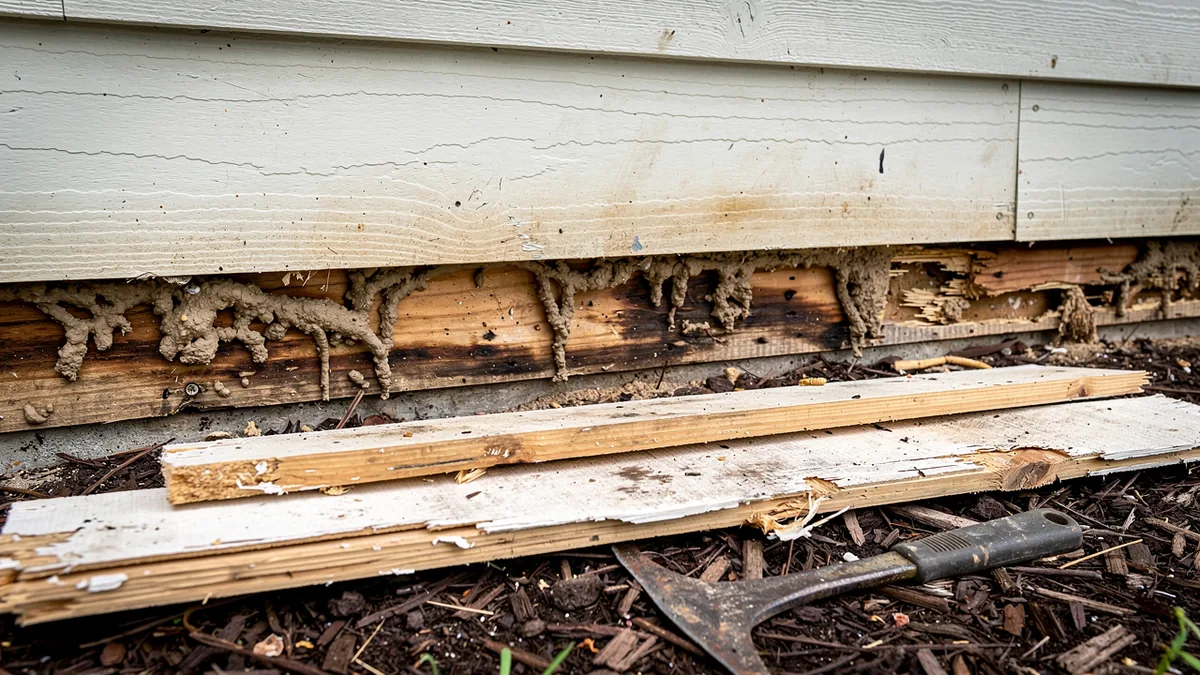
Wood siding and trim give a house warmth and character, and in Biscayne Gardens and the neighbourhoods around it they also face two steady threats. Termites eat wood, and moisture softens it, and each one makes the other worse. That combination is the most common reason owners here give up on wood and move to another material. Here is how the damage happens, how to spot it, and what the alternatives offer.
Two kinds of termites, two kinds of damage
University of Florida extension specialists describe drywood and subterranean termites as the two groups homeowners run into most. They attack a house differently.
Subterranean termites live in the soil and travel up into the house through mud tubes, looking for wood that touches or sits close to the ground. Drywood termites live entirely inside a piece of wood and never need soil, so they can show up in siding, trim or fascia anywhere on the house.
Why moisture makes it worse
Termites need moisture, and wet wood is softer and easier for them to work through. UF's guidance lists minimizing moisture alongside cutting off food sources and making the house easier to inspect as the keys to prevention.
On a wall, moisture usually comes from the same places: sprinklers hitting the siding, gutters overflowing, failed flashing over windows, and boards that sit too close to soil or mulch. Rot and termite damage tend to start in exactly those spots, often at the bottom courses and under window sills.
Signs to look for on wood siding
Walk the house slowly and look closely at the lower walls and trim. Signs of trouble include:
- Mud tubes running up the foundation or behind the bottom boards, a sign of subterranean termites.
- Small piles of tiny, six-sided pellets below a board, often with pinhead-sized holes above them, a sign of drywood termites.
- Boards that sound hollow when tapped or dent easily under a thumb.
- Paint that bubbles or ripples over a board that has been hollowed out behind it.
- Soft, dark or crumbling wood near the ground, around windows or at the ends of boards.
Why the problem is growing
Two invasive subterranean species, the Formosan and the Asian subterranean termite, have spread well beyond where they first arrived. A 2026 University of Florida study found the Formosan termite now established across most of Florida's coastal counties and most large urban centers, and the Asian species beyond the South Florida range it was once thought to be limited to. The researchers also note that these termites are hard to detect, so damage is often extensive by the time anyone notices.
Treat the termites, then fix the siding
Siding work does not deal with a termite colony. A pest control professional should identify the species and treat it first, whether that means soil treatment, baiting or fumigation for drywood termites.
Once the colony is handled, damaged boards come off. That is the moment to check the sheathing and framing behind them, because termites rarely stop at the outer board. Replacing a few boards with new wood brings back the same food source, which is why many owners decide to change material on that wall or the whole house.
Fiber cement as a replacement
Fiber cement is made mostly of cement and sand. James Hardie says its fiber cement architectural panels hold no appeal for termites, and that its siding is engineered to resist moisture and rot. It also takes paint well and keeps the look of painted lap boards, which suits owners who liked the wood appearance and want it without the upkeep.
Vinyl as a replacement
Vinyl gives termites nothing to eat and does not rot. It costs less than fiber cement and needs no painting. It is lighter and hung loosely to allow for movement, so choose a product rated for South Florida wind loads and installed to its approval. Vinyl also suits owners who want to stop painting altogether, though it will not give the same crisp, painted-wood look that fiber cement can.
Keeping termites from coming back
New siding takes away a food source, but termites can still reach framing behind it. UF's guidance points to a few steps that help any house:
- Keep at least 6 inches of clear space between the bottom of the siding and the soil or mulch line, so mud tubes are easy to spot.
- Remove wood-to-ground contact such as old form boards, stacked lumber and wooden planters against the walls.
- Keep firewood and wood debris away from the house.
- Have the house inspected regularly by a pest control professional.
Siding help in Biscayne Gardens
For local conditions and costs, see our Biscayne Gardens siding page. If you are leaning toward a cement-based board, the fiber cement siding installation page explains how it is installed and what it costs, and the vinyl siding installation page covers the lighter option.