Most homeowners replacing siding end up choosing between two materials: fiber cement and vinyl. Both can look good and both can last, but they behave very differently on the wall, ask for different kinds of care and cost different amounts to install. Here is how they compare on the points that matter most for a house in South Florida, without pretending either one is right for everybody.
What each one is made of
Fiber cement boards are made mainly from cement, sand and wood fiber, pressed into planks, panels or shingles. They are heavy, rigid and usually painted, either at the factory or on site.
Vinyl siding is made from PVC plastic, formed into thin, light panels with the color running through the material. It is flexible, it moves with temperature, and it never needs paint to keep its color, though the color does fade over time.
How they look on the wall
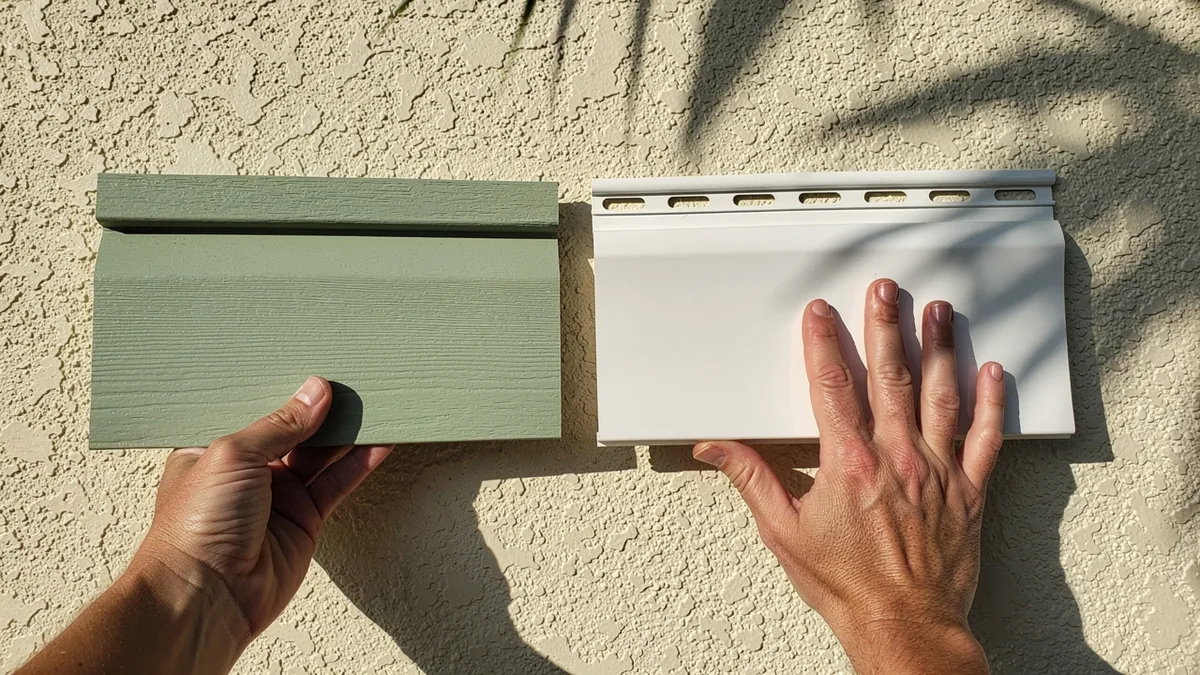
Up close, the difference is easy to see. Fiber cement has crisp, deep shadow lines and a flat, solid face, and painted boards look much like traditional painted wood. Vinyl panels are thinner, so the shadow line at each lap is shallower, and long walls can show slight waves where panels overlap or have moved in the heat.
Both come in lap siding, shingle-style and vertical board-and-batten looks. Vinyl offers a wide range of factory colors that never need painting. Fiber cement can be ordered prefinished or painted any color you want, which matters if you are matching trim, an addition or a neighborhood style.
Durability and impact
Fiber cement is hard and stiff. It does not dent from a ball or a bumped ladder the way thin vinyl can, and the board itself is not weakened by sun. It can chip or crack from a sharp, heavy blow, and it needs its cut edges sealed to stay sound.
Vinyl is tougher than it looks for everyday knocks, because it flexes rather than breaks. Thicker panels resist dents better than thin, budget grades. Over many years of strong sun, though, vinyl can turn brittle, and older panels crack more easily on impact.
Heat and fire
Heat is where the two differ most. Fiber cement does not soften in the sun and does not burn. Vinyl is a plastic, so intense heat can warp it. A grill parked too close, a nearby fire or sunlight reflected from certain window glass can all distort vinyl panels, and in a fire vinyl melts and burns. If your home is close to neighbors or you cook outdoors near a wall, that difference is worth weighing.
Wind requirements here
Broward and Miami-Dade are inside the Florida Building Code's high-velocity hurricane zone. Whichever material you choose, the product has to carry the approvals required for that zone and be fastened exactly as those approvals specify. A good fiber cement job and a good vinyl job can both meet the requirements. The weak point is usually installation shortcuts, not the category of material.
Upkeep over the years
Vinyl is the lower-effort option. Wash it once or twice a year, keep an eye on panels after storms, and that is most of the work. It cannot be refreshed easily if it fades, beyond painting with products made for vinyl.
Fiber cement needs more attention to its finish. The boards outlast the paint, so expect to repaint at some point, with the sunniest walls needing it first, and to renew caulked joints as they age. In return, you can change the color whenever you like.
Installation differences
Fiber cement is heavier and slower to install. Boards take two people to handle, cutting produces fine silica dust that crews control with special saws or shears and dust collection, and the trim and joints take more care. Vinyl goes up faster, with lighter tools, but has its own rules: panels must hang loosely enough to expand and contract, or they buckle in the heat. Either material fails early if installed carelessly.
What they cost
National cost guides consistently put installed vinyl at the lower end of the range and installed fiber cement higher per square foot. For a whole project the gap holds, and the researched national ranges for each are on our vinyl siding installation and fiber cement siding installation pages. These are national figures, not local quotes. Your price depends on your wall area, the product line, trim, tear-off and any repairs, and it is set by an estimate after the house has been measured.
Which one fits your home
Vinyl tends to suit owners who want the lowest upkeep and a lower upfront cost, on homes where walls are not close to heat sources. Fiber cement tends to suit owners who want a solid, painted look, better heat and fire behavior and the freedom to change color, and who are comfortable with repainting down the road.
To go deeper on either option, read about fiber cement siding installation or vinyl siding installation. If you are in North Miami or nearby, the siding contractor page for North Miami covers local service, and our guide on how long siding lasts in strong sun looks at aging in more detail.