Siding in South Florida rarely gives up because of cold weather. It wears down slowly under sun, heat and humidity that never take a season off. The material matters, but so does the way it was put on and how it is looked after once the crew leaves. This guide walks through what strong sun does to each common siding type and what actually stretches its working life.
Why sun and heat do most of the damage here
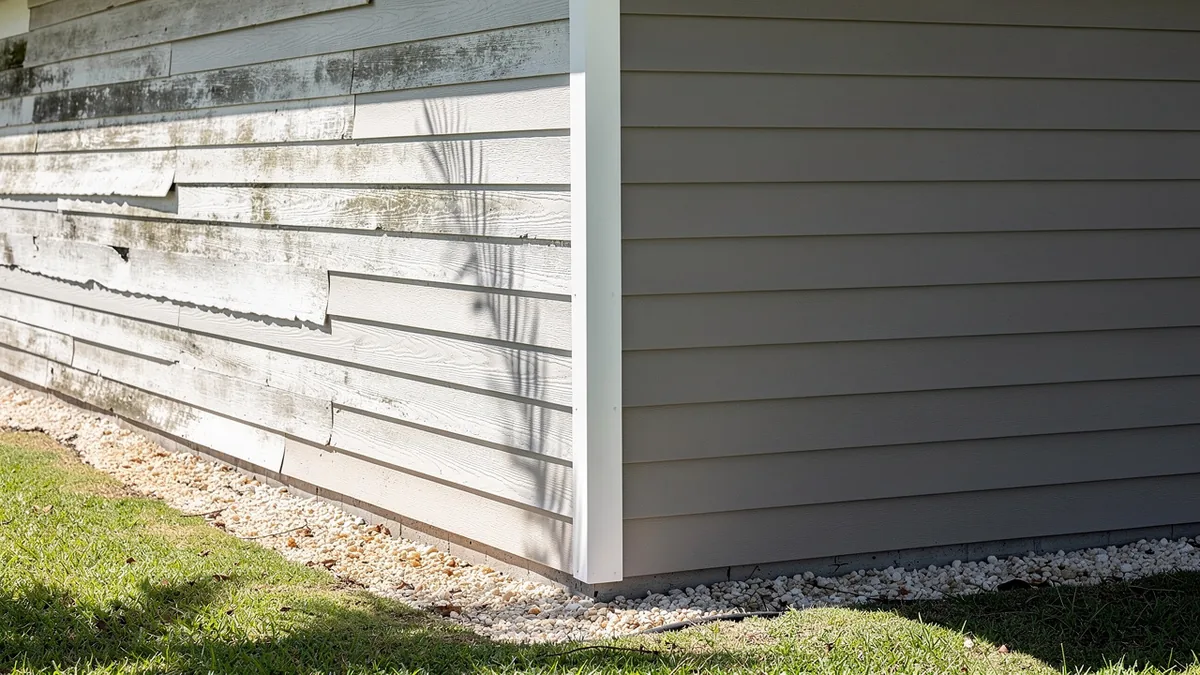
Ultraviolet light breaks down the plastics in vinyl and the binders in paint. Over the years that shows up as fading, a powdery film on the surface and a finish that no longer sheds water the way it did. Heat adds a second kind of stress. Siding warms up and expands during the day, then shrinks back at night, and it repeats that cycle hundreds of times a year.
Not every wall ages at the same speed. South and west walls take the long afternoon sun and usually look tired first. A wall shaded by a tree or a neighbor's house can look years younger than the one around the corner, even though both went up at the same time.
Vinyl: fading, chalking and movement
Good vinyl siding can last for decades, but in strong sun its color fades first. Darker shades absorb more heat, so they run hotter on the wall and tend to show sun wear sooner than light ones. Rub a hand across an old panel. If it comes away chalky, the surface is breaking down.
Movement is the other weak point. Vinyl panels are meant to hang loosely on their nails so they can slide as they expand. Panels nailed too tight buckle and ripple on hot afternoons, and that damage usually traces back to installation rather than the product. One more heat source surprises people. Sunlight bouncing off some energy-efficient window glass can be concentrated enough to soften and warp vinyl on a nearby wall.
Fiber cement: the board outlasts the paint
Fiber cement is made mostly of cement, sand and wood fiber, so heat does not soften it and sun does not break the board down the way it does plastic. What wears is the finish. Factory-applied color holds up longer than most site-applied paint, but either one will eventually need repainting, and the sunniest walls will ask for it first.
The details that protect fiber cement are small ones. Cut ends need sealing, caulked joints dry out and crack over time, and boards should sit with the right clearance above the ground and the roofline. Look after those, and the boards themselves tend to be the last part of the wall to go.
Wood and engineered wood
Wood siding looks warm and natural, but in this climate it asks for the most attention. Sun dries the paint film, the film cracks, water gets in, and the wood starts to swell and soften. Engineered wood products are more stable than solid boards, yet they still rely on a sound paint coat and sealed edges. Expect to repaint more often than you would with fiber cement, and keep a close eye on the lowest courses.
What shortens siding life on any material
Most early failures share a few causes, and very few of them are the siding's fault alone.
- Lawn sprinklers hitting the same wall every morning, leaving it damp and stained
- Shrubs and vines pressed against the siding so the wall never dries
- Gutters that overflow onto one spot or downspouts that empty against the wall
- Grills, heaters or dryer vents close enough to scorch or soften panels
- Caulk and paint that are left to fail instead of being touched up
Reading the paperwork before you buy
Manufacturers publish care and installation instructions for every product, and those documents tell you a lot about real-world life. Look at how the color or finish coverage differs from coverage of the board itself, what conditions are excluded, and whether the product must be installed a certain way to qualify. A long figure on the brochure means little if the siding goes up against the instructions.
Habits that add years
Rinse the siding once or twice a year to clear dust and pollen before it bakes on. Walk around the house after big storms and look for loose pieces, open joints and cracked caulk. Point sprinkler heads away from the walls. Trim plants back so air can move behind them. On painted siding, repaint the sunniest walls when the finish starts to dull, rather than waiting for it to peel.
None of this takes long, and it is far cheaper than replacing boards that failed early. Keep a note of when each wall was last painted or caulked. A simple record makes it easy to spot which side of the house is aging fastest, and it helps whoever quotes the next repair understand what the siding has been through.
Choosing siding for sunny walls in Ives Estates
Ives Estates sits in northeast Miami-Dade, under the same strong sun as the rest of the coast, and any wall without shade there will show it over time. Before choosing a material, stand outside at three in the afternoon and note which walls are in full sun. Those are the walls to plan around. If you are weighing materials, our siding contractor page for Ives Estates covers local service details and what the work involves. For the materials themselves, read about fiber cement siding installation and vinyl siding installation, or see how the two compare side by side.