
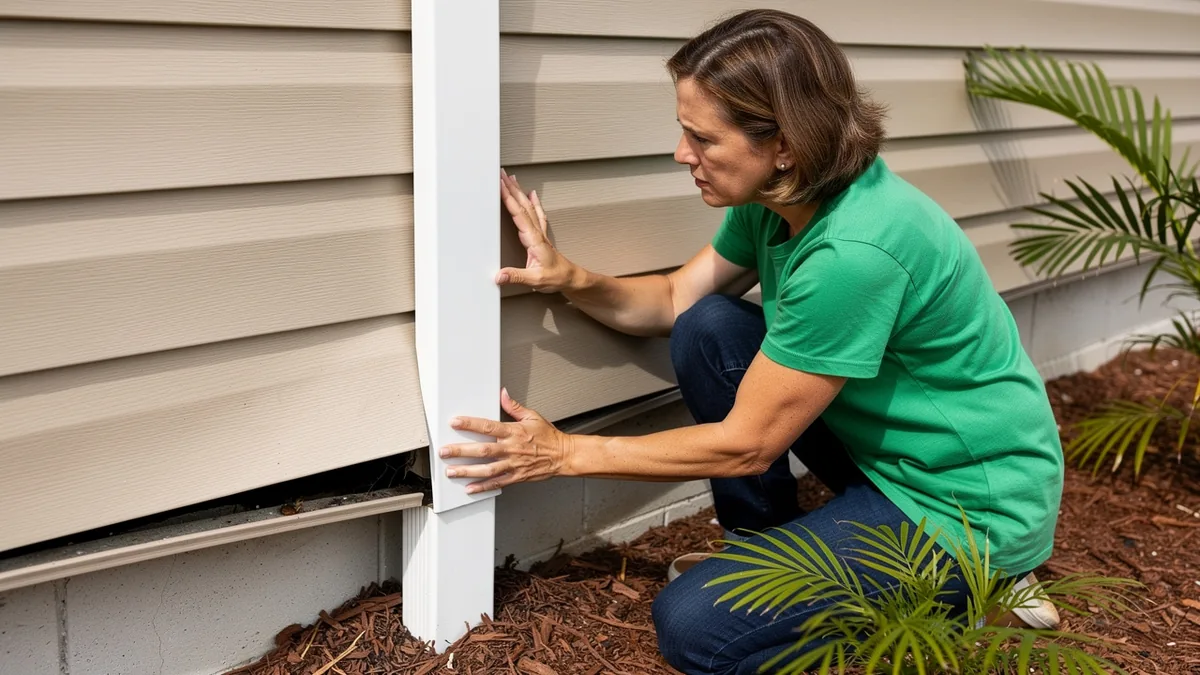
Siding fails in a hurricane the same way most things do: at the weakest spot first. One loose panel gives the wind an edge to grab, and the panels beside it follow. In a coastal city like Dania Beach, an hour spent walking around the house before the season starts can head off a lot of storm damage. This checklist is the one worth running every spring.
When to do it
The National Hurricane Center gives the Atlantic hurricane season as June 1 to November 30, with the peak around September 10 and most activity between mid-August and mid-October. Storms sometimes form outside those dates too.
April and May are the best months for a siding check. Anything you find can be repaired before June, and you are not competing with everyone else who waited until a storm was in the forecast.
Walk every wall
Go around the house slowly, close to the walls, and look at each elevation from bottom to top. Check for:
- Panels or boards that are cracked, split or missing pieces.
- Vinyl panels that have come unlocked from the course below, often at the bottom row or near corners.
- Pieces that rattle or lift when you press gently along their lower edge.
- Gaps at corner posts and where siding meets trim.
- Fiber cement or wood boards with loose or popped nails.
Trim, soffits and fascia
Siding often gets the attention while the trim around it fails first. Look up at the soffits under the roof edge. Loose or sagging soffit panels let wind and rain into the attic, and once wind pressure gets inside it pushes outward on everything else.
Check that fascia covers are tight, that trim around windows and doors is fastened along its length, and that nothing is held on by caulk alone.
On a house close to the beach, also look for rust streaks running down from nail heads and fixtures. Salt air corrodes the wrong fasteners quickly, and a rusted nail keeps only part of its grip when the wind starts pulling at the wall.
Sealant and flashing at openings
Hurricane rain does not fall straight down. It is driven sideways and upward, and it finds every gap around windows, doors, vents and pipes. Look at the sealant where trim meets the window frame and where pipes and wires pass through the wall. Cracked, shrunken or missing sealant should be cut out and redone.
Above windows and doors, check that the head flashing is still in place and sloping outward.
Clear the debris risks
Much of the siding damage in a storm comes from things hitting the house, not the wind alone. Before the season:
- Trim dead fronds and coconuts from palms near the walls.
- Cut back branches that overhang or touch the house.
- Make a plan for where patio furniture, grills, planters and trash cans will go when a storm is coming.
- Check fences and sheds close to the house that could come apart and strike a wall.
What not to do
Some quick fixes make vinyl worse. Do not drive screws tight through a loose vinyl panel, because the panel needs to move with heat and will crack around a fixed fastener. Do not run caulk along vinyl laps to stop them rattling, which traps water and pins the panels in place.
Hold off on pressure washing right before a storm too. A strong jet can push water behind the siding and lift panel edges. A loose panel needs to be re-locked and re-fastened properly, not patched.
Keep records before the season
Take clear photos of every wall in good light, along with close-ups of trim and soffits. If you ever need to file a storm claim, photos showing the siding's condition beforehand make the conversation much easier.
Keep the siding product name, color and approval number with those photos. Matching material after a storm is far simpler when you know exactly what is on the house, and repair crews are stretched thin in the weeks after a hurricane, so having those details ready saves time.
After a storm passes
Wait until the wind has fully died down and the area is safe before walking around the house. Look for missing panels, lifted courses, punctures and loose soffits.
If sheathing or house wrap is exposed, cover it with a tarp fastened at the edges to keep rain out until a proper repair can be made. Then check inside the house along those walls for damp drywall or baseboards, since water that got behind the siding may already be in the wall.
Siding help in Dania Beach
For local conditions and costs, see our Dania Beach siding contractor page. If your check turns up widespread problems, the siding replacement page explains the next step, and our guide to vinyl siding wind ratings covers what to look for in new panels.