After a hurricane, it is easy to spot the houses that lost vinyl siding. Panels end up in yards and gutters, and the bare wall behind them takes on water. Most of those failures come down to two things: a panel that was never rated for the wind load on that wall, or a good panel installed the wrong way. Understanding the rating and how it depends on installation helps you choose vinyl that stays put.
What a wind rating actually measures
Vinyl siding is rated for wind by its design pressure, the suction and push a wall surface sees when wind blows across a house. It is a pressure, not a wind speed. The Vinyl Siding Institute describes the rating as reflecting the highest wind application the cladding is suitable for, and building officials in high-wind regions use it to decide what may be installed.
Turning a wind speed into a pressure depends on the building. Height, the exposure of the site, and the part of the wall all change the load. Corners and edges see higher suction than the middle of a wall, so a product has to cover the worst spot on the house, not the average.
Why a wind speed on a brochure is not the whole story
Marketing often turns the rating into a miles-per-hour figure. That number assumes a particular house, height and site exposure, and it may not match yours. A building official looks at the published design pressure and the installation details, not the headline speed.
Treat a wind speed claim as a starting point for questions. Ask which design pressure the product carries and whether that covers the loads for your wall height and location.
Where to find the rating
The rating is not hidden. According to the Vinyl Siding Institute, design pressure ratings appear on the product packaging, and certified products carry a published standard design pressure rating as part of its certification program. Three places to check:
- The carton label for the exact product and color being installed.
- The manufacturer's code compliance or evaluation report, which lists the ratings and the conditions they apply to.
- The product approval for South Florida, described below.
Product approval in Broward and Miami-Dade
Both counties sit in the Florida Building Code's High-Velocity Hurricane Zone, where exterior products face stricter testing. Miami-Dade County's Product Control Section, which reviews and approves building products, lists siding and wall cladding among the product types it mainly handles.
In practice, the vinyl on your permit should carry an approval that covers use in this zone, and the installation has to follow that approval. Our guide to checking a Miami-Dade product approval shows how to look one up.
Fastening is part of the rating
A rating describes a panel installed as tested. Change the fastening and the number no longer applies. The institute's own inspection checklist calls for:
- Corrosion-resistant fasteners, which matters near salt air.
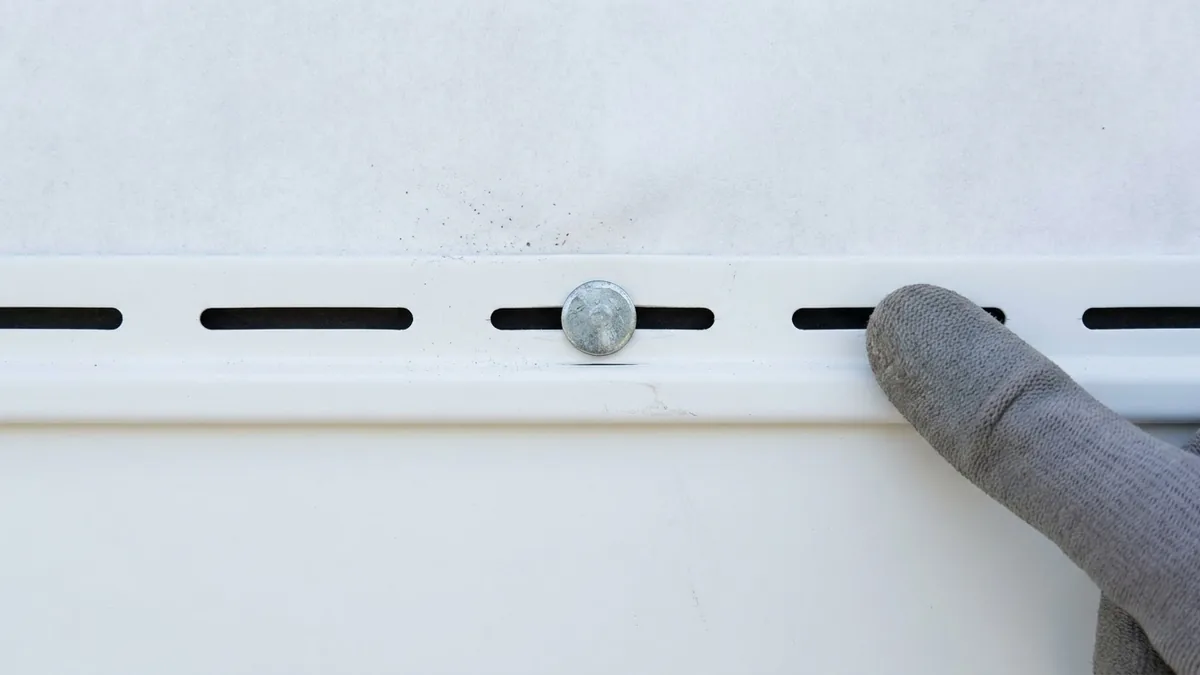
- Nails driven in the center of the nailing slot, reaching at least 1 1/4 inches into solid nailable material.
- A gap of about the thickness of a dime between the nail head and the panel, so the panel can still move.
- Panels fully locked into each other, with a starter strip at the first course that matches the panel's lock.
Reinforced nail hems
The strip along the top of a vinyl panel where the nails go is the nail hem. Products designed for high-wind regions typically have a reinforced hem, either doubled or rolled over, instead of a single layer of vinyl. A thicker hem resists the nail head pulling through when wind tugs at the panel, which is how many panels come off in a storm.
The weak spots under windows and at the top of the wall
Where a panel is cut, under a window sill or at the top of a wall, its locking edge is gone. Those pieces are held by utility trim, with tabs punched into the cut edge about every 6 inches so they catch in the trim. Skip that detail and the cut panel is held by almost nothing.
Soffits matter too. Vinyl soffit should be fastened at both the fascia and the wall, and the institute calls for intermediate nailing strips in coastal areas wherever an unsupported span runs past 12 inches.
Questions to ask before you buy
Before you sign for vinyl siding, ask:
- What design pressure is this product rated for, and does it cover my house?
- Which product approval number will go on the permit?
- Does the panel have a reinforced nail hem?
- What fasteners will be used, and at what spacing?
- How will cut panels under windows and at the eaves be secured?
Choosing vinyl for a storm-prone home
Rated, approved vinyl that is fastened correctly holds up well in South Florida weather. Our vinyl siding installation page explains the materials and process in more detail. For homes in Opa-locka, the Opa-locka siding page covers local housing and storm exposure.