
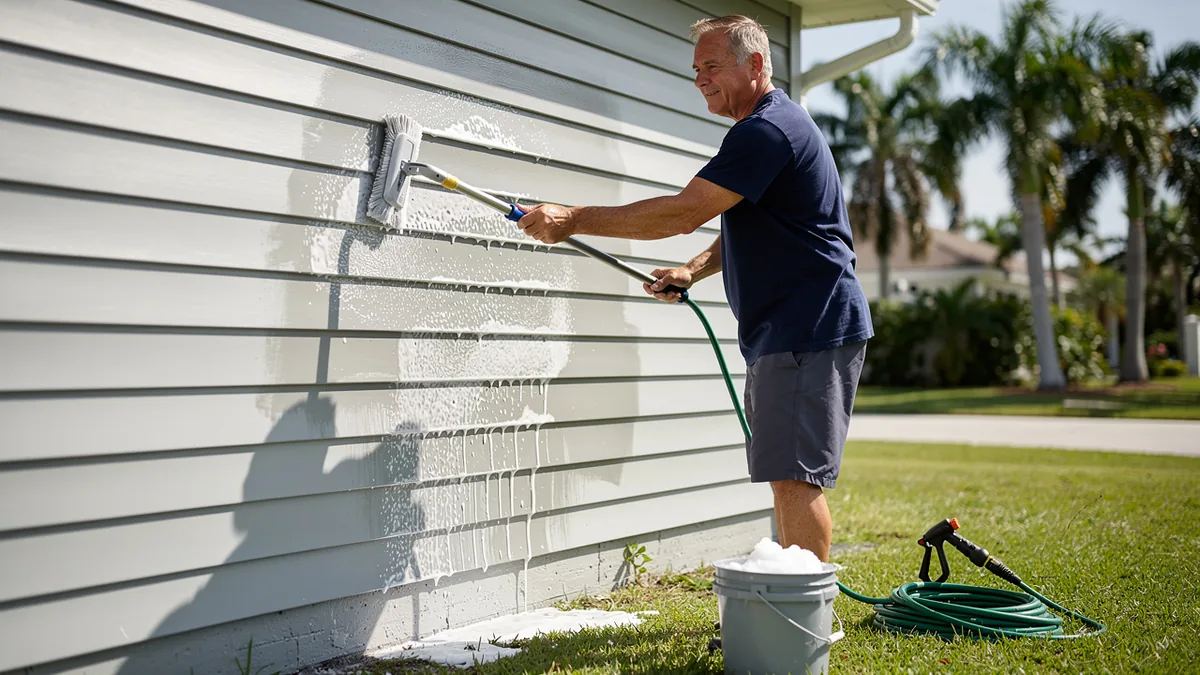
Vinyl siding is one of the easiest exteriors to keep clean, and also one of the easiest to damage while cleaning it. Too much pressure, the wrong chemical or a stiff brush can scratch, dull or loosen panels that would otherwise last for many years. The good news is that the safest method is also the simplest. Here is how to wash vinyl properly and what to avoid.
What you need
Most vinyl siding comes clean with basic tools you probably already own.
- A soft-bristle brush on a long handle, or a soft cloth for low areas
- A garden hose with an adjustable spray nozzle
- A bucket of water with a mild household detergent
- Plastic sheeting or a tarp to cover delicate plants
- A sturdy step ladder for the higher courses, used on level ground
Before you start
Ten minutes of preparation makes the wash safer and quicker. Close every window on the wall you are cleaning and make sure outdoor outlet covers are shut. Move patio furniture, grills and planters a few feet away from the house. Soak nearby plants with plain water first and cover the delicate ones, then rinse them again when you finish, so detergent does not sit on the leaves.
Pick a calm day. Wind blows spray back at you, dries soap before you can rinse it and makes ladder work less steady. Set the ladder on firm, level ground, and leave high gable walls on a two-story house to someone with the right equipment.
The basic wash, step by step
Work on one section of wall at a time, about as wide as you can reach comfortably. Wet the section with plain water first, then scrub with the soapy brush, starting at the bottom and working upward. Washing from the bottom up stops dirty streaks from running down over dry siding and leaving lines that are hard to remove.
Rinse from the top down before the soap dries, then move to the next section. On a hot, sunny day, wash the shaded side of the house first and save sunny walls for early morning or late afternoon, so the soap does not dry onto the panels.
What never to use on vinyl
Vinyl is tough, but its surface is plastic, and some products will scratch it, dull it or even soften it.
- Abrasive scrubbing powders, steel wool or wire brushes
- Solvents such as paint thinner, nail polish remover or lacquer thinner
- Strong, undiluted chemicals that the siding maker does not approve
- Furniture polish or any product that leaves an oily film
Pressure washers: use with care
A pressure washer can clean vinyl quickly, but it is also the most common way people damage it. Vinyl panels overlap, and the joints are designed to shed water running down the wall, not water blasted upward. A jet aimed under the laps can force water behind the siding, into the wall and around windows and vents.
If you do use one, check the siding manufacturer's care instructions first, use a low pressure setting and a wide fan tip, keep the nozzle well back from the surface, and always spray straight on or slightly downward. Stay away from windows, vents, light fixtures, electrical outlets and the edges of trim. If in doubt, a soft brush and a garden hose do the job without the risk.
Tough stains
Some marks need more than soap. Orange or brown streaks near the ground often come from sprinkler water with a high iron content, and they respond to cleaners made for rust stains on vinyl. Tar, grease or crayon usually lifts with a cleaner the siding maker lists as safe for its product. Test any stronger product on a small hidden spot first, rinse well afterward, and never leave a cleaner sitting on the panels in direct sun.
Green or black growth on shaded walls is a different problem. It points to moisture and needs its own treatment, so do not try to scrub it away with something harsh.
How often to wash
For most homes, a wash once a year keeps vinyl looking good, with a quick rinse in between if pollen, dust or road grime builds up. Walls near busy roads, under trees or next to sprinkler heads usually need more attention than the others. A regular gentle wash is better than a harsh scrub every few years, because dirt left to bake on in the sun gets harder to shift.
Check the siding while you clean
Washing is the perfect moment to look the walls over closely. Watch for panels that have come unlocked at the bottom edge, cracks, holes, warped areas near grills or reflective windows, and gaps where siding meets windows, doors or trim. Spotting those early keeps a small repair from turning into a larger one.
When cleaning is not enough
If panels stay chalky, faded or brittle after a good wash, the siding may be near the end of its life. The vinyl siding installation page explains the options for new panels, and if you live in Miami Gardens or nearby, the siding contractor page for Miami Gardens covers local service. Our guide to how siding ages in strong sun explains what to expect as vinyl gets older.