
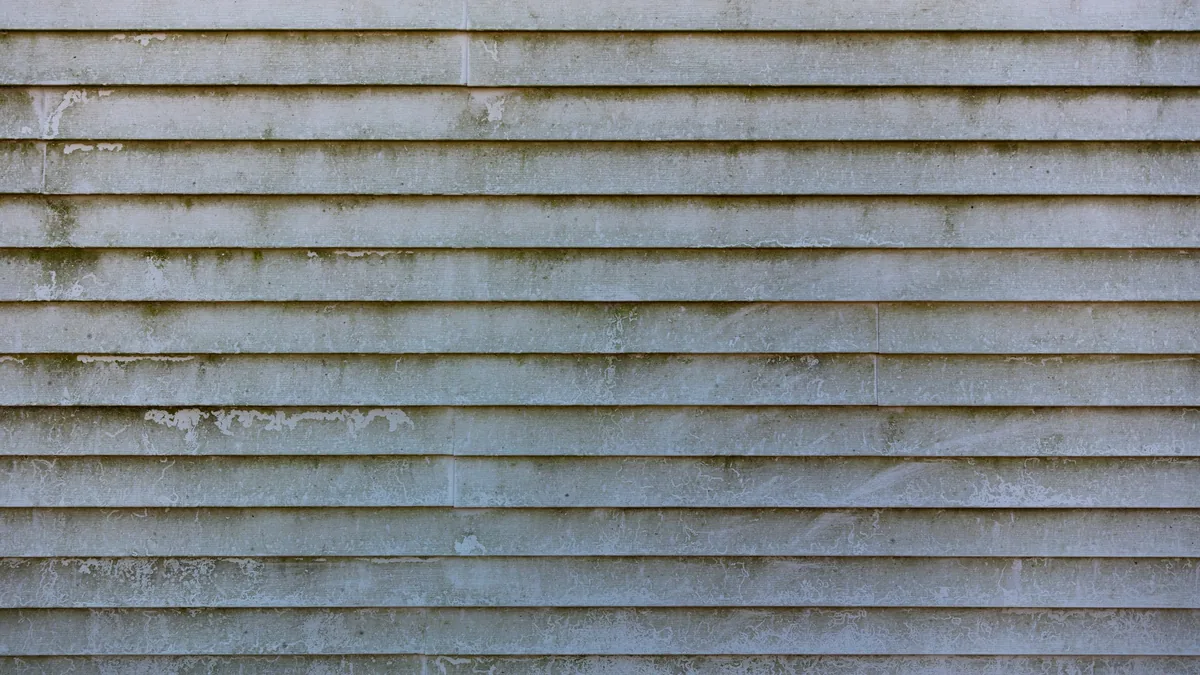
In North Miami Beach, green and black growth on siding is close to a fact of life. Warm, humid air, frequent rain and shady walls give mildew everything it wants. Most of the time it is a cleaning job. Sometimes it is a sign that water is getting behind the siding and staying there. The trick is telling the two apart before you either replace good siding or wash over a problem that keeps growing.
Why it grows so easily here
Mildew on siding rarely feeds on the siding itself. It lives on the thin film of dirt, pollen and organic debris that settles on any outside wall, and it thrives where that film stays damp. The EPA puts the principle simply: the key to mold control is moisture control.
That is why growth shows up in the same places on most houses: walls that get little sun, the lower courses behind hedges, the area under deep eaves, and anywhere a sprinkler hits the wall every morning.
What surface mildew looks like
Surface growth is usually a spread of gray, black or green speckles, heaviest on shaded walls and fading toward the sunny ones. It sits evenly on the face of the siding and does not follow seams or joints.
A common quick check is a drop of diluted household bleach on a hidden spot. Mildew lightens within a minute or two, while ordinary dirt does not. If the spot wipes clean and the board underneath is hard and sound, you are looking at a cleaning job.
Signs the problem is behind the siding
Growth that starts from inside the wall looks and behaves differently. Watch for:
- Staining that runs in streaks from seams, laps, corners or the bottom of windows.
- Growth that comes back in the same spot within weeks of cleaning.
- Boards that feel soft, swollen or spongy when pressed.
- Paint peeling or blistering on wood or fiber cement in one area.
- A musty smell indoors, or stains on the inside face of an exterior wall.
Cleaning surface growth the right way
For growth on the surface, gentle works best. The EPA's advice for hard surfaces is to scrub them with detergent and water and dry them completely. On siding that means a soft brush on a long handle, a mild cleaner made for exterior surfaces, and a rinse with a garden hose from the top down.
Be careful with pressure washers. A strong jet aimed upward or into the laps drives water behind the siding, which can cause the very problem you are trying to avoid. Wet nearby plants first and rinse them afterwards if you use any cleaner. Our article on cleaning vinyl siding without damaging it covers the method in more detail.
Cut down the moisture outside
Cleaning lasts longer when the wall can dry out. Simple changes help:
- Trim shrubs back so air moves between them and the wall.
- Turn sprinkler heads away from the siding.
- Keep gutters clear and make sure downspouts discharge away from the house.
- Keep soil and mulch below the bottom of the siding so the lowest course is not sitting in damp ground.
When cleaning is not enough
If the signs point behind the siding, cleaning the face only hides the symptom. The EPA warns that if you clean up mold but do not fix the water problem, the mold is likely to come back. On a wall, the water problem is usually a gap in flashing around a window, a failed or missing water barrier, or a roof-to-wall joint without a kick-out flashing.
The way to know is to lift a few pieces of siding where the staining starts and look at the sheathing. Damp but sound sheathing with a clear leak path may need only a local repair. Soft, stained or crumbling sheathing over a wide area usually means taking the siding off that wall, replacing the damaged wood and water barrier, and fixing the flashing before new siding goes on.
Materials that cope with humidity
No siding stays spotless in this climate, but some handle damp better. Vinyl does not rot and fiber cement does not rot in sound boards, so either gives growth nothing to break down, and both clean up easily. Wood needs sound paint at all times, because once water reaches bare wood, rot and mildew move in together.
The finish matters too. Smooth, intact paint or factory finishes give dirt less to cling to than rough or chalking surfaces.
A simple routine for a humid climate
Walk around the house after the rainy season and again in spring. Clean light growth early, check the shaded walls closely and press on any stained boards. Catching moisture behind the siding in its first season is far cheaper than finding it years later.
Help in North Miami Beach
For local conditions and costs, see our North Miami Beach siding contractor page. If what you are seeing points to damage behind the siding, the siding replacement page explains how a damaged wall is opened, repaired and re-sided.