
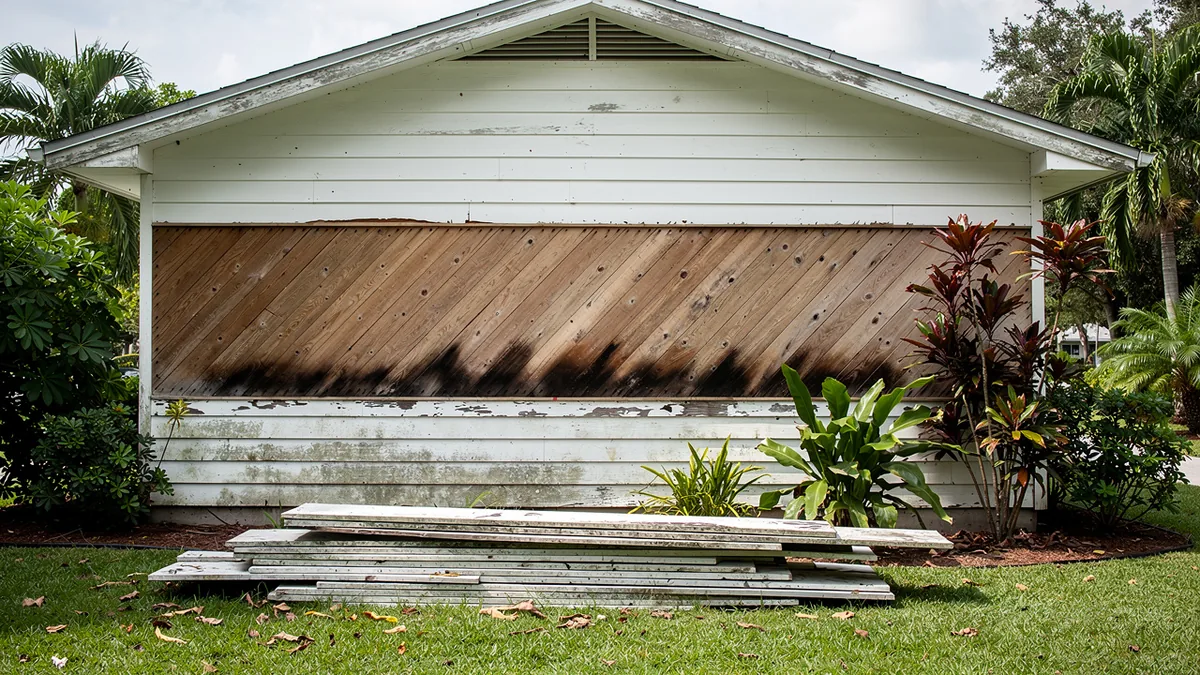
Older houses have character, and they also have history hidden in their walls. Decades of repairs, paint layers and materials that are no longer used all sit under the siding you can see. None of that should stop a re-siding project, but each of these things is far easier to deal with when you know about it before the first board comes off.
What is on the wall now
Start by finding out exactly what the current siding is, and whether there is more than one layer. Older homes sometimes have newer siding fastened right over the original boards. Each extra layer adds weight to remove, changes how deep the window and door trim needs to be, and can hide damage on the original layer.
Pull back a piece of trim at a corner or around a hose bib, or look at the bottom edge of the wall, and you can often see the layers in cross-section. Old permit records for the address can also show when earlier siding or additions went on, which helps date what you are looking at and hints at what may be under it.
Lead paint on homes built before 1978
If your house was built before 1978, the paint on the old siding and trim may contain lead. Scraping, sanding, cutting or tearing off painted boards can turn that paint into dust and chips that settle on the ground, the porch and the inside of open windows.
Under the federal EPA Renovation, Repair and Painting rule, firms doing renovation work that disturbs paint in pre-1978 homes must be EPA- or state-certified and follow lead-safe work practices. Before hiring anyone for a tear-off on an older house, ask whether the firm holds that certification and how they will contain dust and debris. Testing the paint first takes the guesswork out of it.
Asbestos in older cement-based siding
Some older homes are clad in cement-based shingles or panels, and older roofing shingles can raise the same question. The EPA lists asbestos cement products and roofing shingles among the building materials that may contain asbestos, and fibers are released when such materials are damaged during repair or remodeling.
If your siding looks like stiff, thin cement shingles, have a sample tested by an accredited asbestos professional before anyone breaks it. EPA's guidance for homeowners is that material in good condition that will not be disturbed should be left alone, and that removal must be done only by a trained and accredited asbestos professional. That rules out treating it as an ordinary tear-off. On some houses the better plan is to leave sound cement siding in place and limit the work to the walls that really need it.
The sheathing and framing behind
Older homes were built with whatever was standard at the time. You may find solid board sheathing, plywood, fiberboard or in some cases no sheathing at all, with siding nailed straight to the studs. Each changes how new siding is fastened and what has to be added first.
Look closely at the lowest part of the walls, under windows and around doors. Decades of small leaks can soften sheathing and the bottom plate of the wall. The honest way to plan for this is an estimate that explains how hidden repairs will be priced once the old siding is off.
Window and door trim depth
New siding, a water barrier and any added sheathing all sit thicker on the wall than thin old boards did. Older windows and doors were trimmed for the original wall. If the new wall comes out past the trim, the trim has to be extended or replaced, and the flashing redone so water still runs outward. Plan this early, because it affects both the look and the price.
Historic designation in Miami Shores
Miami Shores Village runs its own historic preservation program. The village's Historic Preservation Board recommends properties for designation, advises owners on preservation matters and acts on applications to renovate or rehabilitate structures on the historic register, and the village reports more than forty designated homes.
If your house is designated, changing its exterior is likely to need the board's review before work starts, and the materials and profiles allowed may be limited. Even if you think it is not designated, confirm with the village's planning and zoning staff before ordering material. Ask about building permits at the same time.
Utilities and fixtures on the wall
Older walls collect fixtures over the years: meters, old service drops, abandoned pipes, light fittings, hose bibs, phone lines and vents. Each one needs a proper mounting block and flashing in the new siding. It is a good moment to remove anything no longer in use, and to have an electrician or the utility handle anything live, such as moving a meter or service line.
Getting a plan together
With these checks done, an older house can take new siding as well as any other. If your home is in Miami Shores, our siding contractor page for Miami Shores covers local service details. To see what a full tear-off and new siding involves, read about siding replacement and what is often found when old siding comes off.