
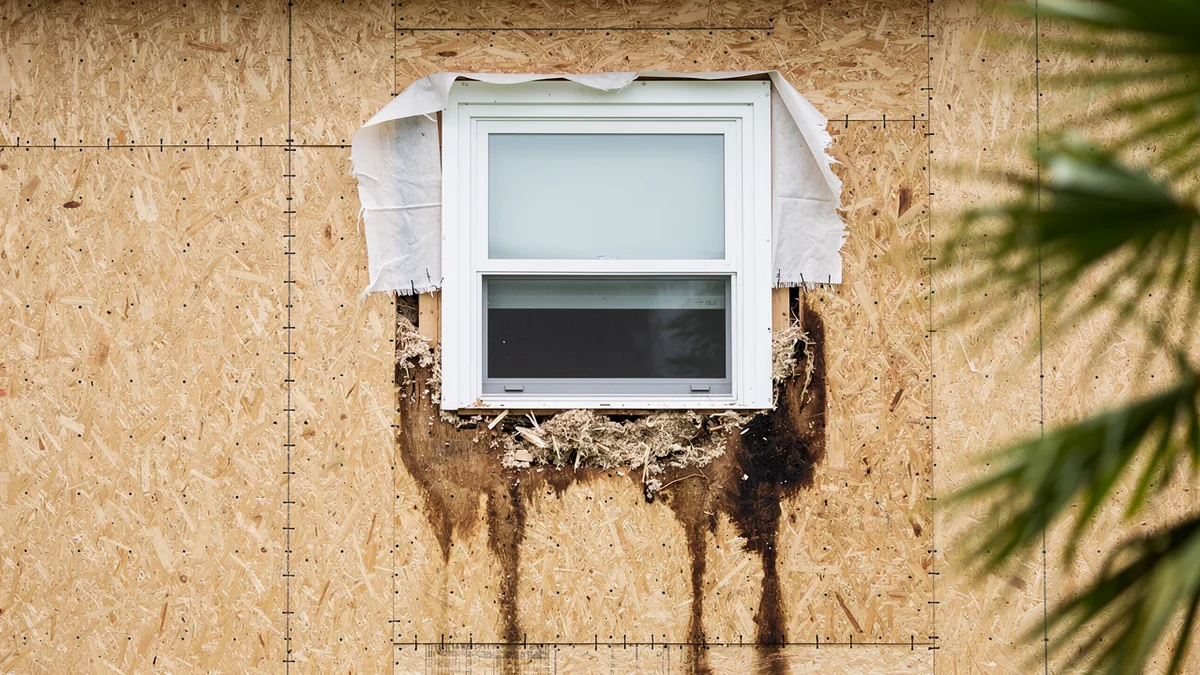
The day the old siding comes off is the day you find out how your walls have really been doing. For years the siding has been the only part anyone could see. Underneath it are the sheathing, the water barrier and the flashing that actually keep the house dry. Most of the time they are in decent shape. Sometimes they are not, and knowing what to expect makes those discoveries much easier to deal with.
How the tear-off works
Before anything is removed, the area around the house is prepared. Plants near the walls are protected, outdoor furniture is moved, and tarps go down to catch debris and nails. Removal then usually goes one wall at a time, so no side of the house is left open longer than it needs to be.
Vinyl comes off quickly because panels simply unlock from each other. Wood, fiber cement and older cement-based materials take longer and produce heavier debris. Any material that may contain asbestos or lead paint has to be identified first and handled under the rules for it, which is a separate process from a normal tear-off.
Where the old siding goes
Old siding, nails, trim and wrap go into a dumpster or a trailer and are hauled away for disposal. National cost guides put removal and disposal of old siding at roughly $1,000–$2,500 for a typical job, depending mainly on how heavy the material is and how much there is. That is a national figure, and a real price depends on the house and is set by an estimate. At the end of each day, a careful crew sweeps the ground with a magnet to pick up loose nails.
Rotted or soft sheathing
The sheathing is the layer of plywood, OSB or boards that the siding was fastened over. It is where most hidden damage shows up. The usual spots are under window corners, below door thresholds, at the bottom course of the wall and anywhere a gutter or roof edge has been dumping water against the house.
Water-damaged sheathing looks dark, stained or delaminated and feels soft under a screwdriver. Small areas are cut out and replaced with new panels of the same thickness. Larger areas may reveal damage to the studs or the bottom plate of the wall, which needs repair before new siding goes on.
A worn-out water barrier
Behind most siding there should be a water-resistive barrier, such as housewrap or building paper. Older barriers are often torn, brittle or patchy, or were never lapped properly so water ran behind them instead of over them. Some older homes have no barrier at all. Replacement is the right time to fix this, because once new siding is on, the barrier cannot be reached again without taking it off.
Missing or failed flashing
Flashing is the metal or membrane that steers water away from openings and joints. Common findings during tear-off include windows installed with no flashing tape, door heads with no drip cap, and roof-to-wall joints missing the kick-out flashing that turns water into the gutter. Many of the stains and rot spots above trace back to one of these missing pieces. Correct flashing at every window, door and roof joint is as important as the new siding itself.
Other things that turn up
Siding hides a surprising amount. Old wiring and abandoned pipe holes, gaps where cables entered the house, nests, wasp colonies and gaps that let insects or rodents into the wall all come to light. Most are small fixes, but they are best sealed while the wall is open, since they let air, water and pests in otherwise.
What happens before the new siding goes on
Once the wall is stripped and the repairs are made, the crew checks that the surface is flat and solid enough to fasten into. Loose sheathing is re-nailed, raised nail heads are driven flush and any old fasteners sticking out are pulled. A new water barrier then goes on, lapped so each upper layer overlaps the one below, followed by flashing at every opening.
Only after that is the new siding started. If a building inspection is required for repairs or for the barrier, it happens at this stage, while everything can still be seen. Covering the wall too early, before repairs are finished or inspected, is the shortcut that most often causes trouble years later.
How hidden repairs should be handled
No one can price damage they cannot see, so the fair approach is agreed before work starts. A clear estimate explains how repairs found during tear-off will be documented and priced, for example per sheet of sheathing or per foot of wall plate, and that nothing beyond the agreed work goes ahead without your approval.
Ask to see the damage, or photos of it, before it is covered up. It shows you exactly where the money went, and it gives you a record of what was fixed behind the new siding.
Planning your replacement
If your siding already shows warning signs, our guide to signs your siding needs replacing is a good starting point, and the siding replacement page covers the full job, from tear-off to finished walls. If you live in North Miami Beach, the siding contractor page for North Miami Beach has local service details.