Every siding problem starts small. The question homeowners ask is when a small problem stops being worth fixing. A loose panel or one cracked board is a repair. Damage that keeps coming back, spreads to other walls or has reached what is behind the siding usually is not. These are the signs that tip the balance toward replacement.
1. The damage is on more than one wall
A single dented panel by the driveway is an accident. Soft boards, cracks or warping on several walls point to the siding wearing out as a whole, from age, sun or water. Fixing one wall at a time means paying for set-up again and again, and the new pieces rarely match the faded ones beside them.
2. Boards feel soft or the wall sounds hollow
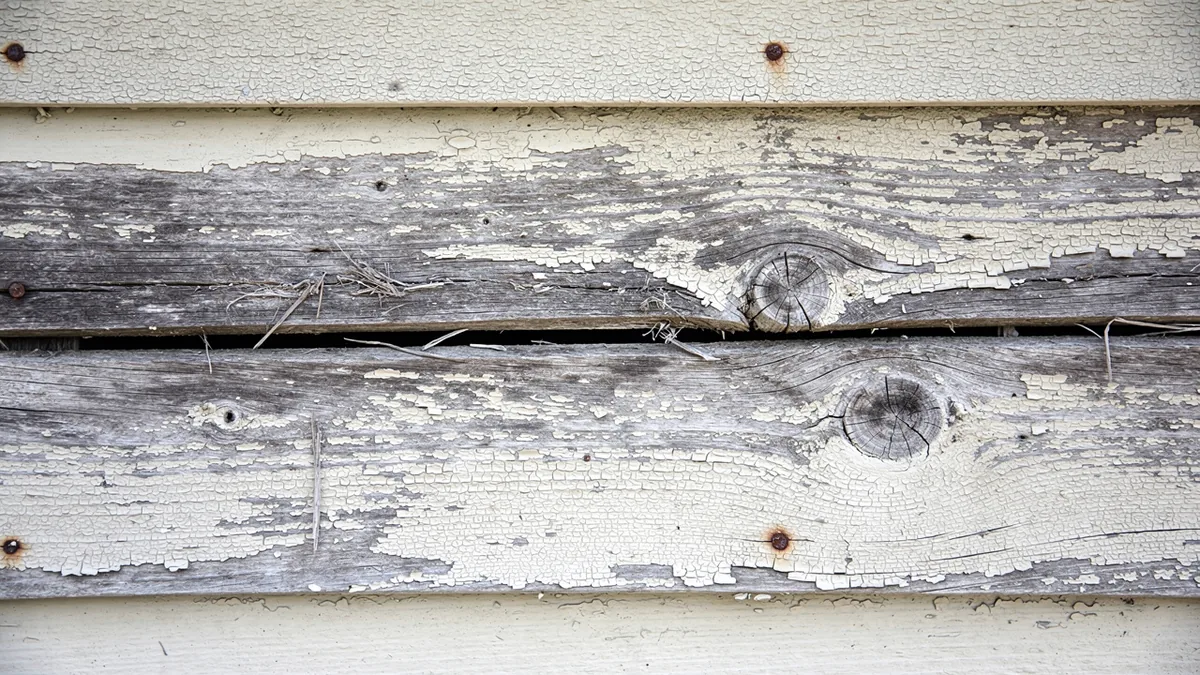
Press on wood or fiberboard siding low on the wall, near downspouts and under windows. If it gives, water has been getting in for some time. By then the sheathing behind is often wet or rotting too, and a patch on the surface leaves that damage in place.
3. Panels keep blowing loose
If you are refastening the same vinyl panels after every storm, the problem is usually the original fastening, brittle panels or a product that was never rated for high winds. In a hurricane zone that is a safety issue as well as a cosmetic one, because loose siding becomes debris.
4. Mildew or staining keeps coming back in the same place
Surface mildew washes off and stays away for a while. Growth or staining that returns to the same corner within weeks often means moisture trapped behind the siding, from a failed water barrier or missing flashing. The wall cannot dry out, and cleaning only treats the symptom.
5. Termites have reached wood siding or trim
Hollow, crumbling wood, small exit holes or mud tubes on the wall are signs of termite activity. Damaged boards have to come off anyway, and replacing them with fiber cement or vinyl takes away the food source on that wall. A termite professional should deal with the colony itself.
6. Vinyl is faded, chalky or brittle
Strong sun breaks vinyl down over the years. When panels leave a chalky residue on your hand or crack when pressed instead of flexing, they will not survive much more wind. Repainting vinyl is possible, but it does not restore the panel's strength.
7. The product is no longer made
Older siding profiles and colours are often discontinued. When a repair means patching in a visibly different board, many owners decide that a full replacement on that elevation, or on the whole house, gives a better result for the money.
When a repair is still the right call
Not every problem needs new siding. A few storm-damaged panels, one cracked board, a gap at a window that needs new flashing and sealant, or a section hit by a mower or ladder are all reasonable repairs, as long as the boards around them and the wall behind are sound. The deciding factor is what is behind the siding, which is why a good inspection lifts a panel or two before anyone recommends replacement.
What to do next
If you are seeing two or more of these signs, it is worth having the walls looked at before the next storm season. Our siding replacement page explains what the job involves, typical costs and how it runs. If your home is in one of the older neighbourhoods north of us, the siding contractor page for Hollywood, FL covers local conditions there. You can also read how fiber cement and vinyl compare before choosing a replacement material.