
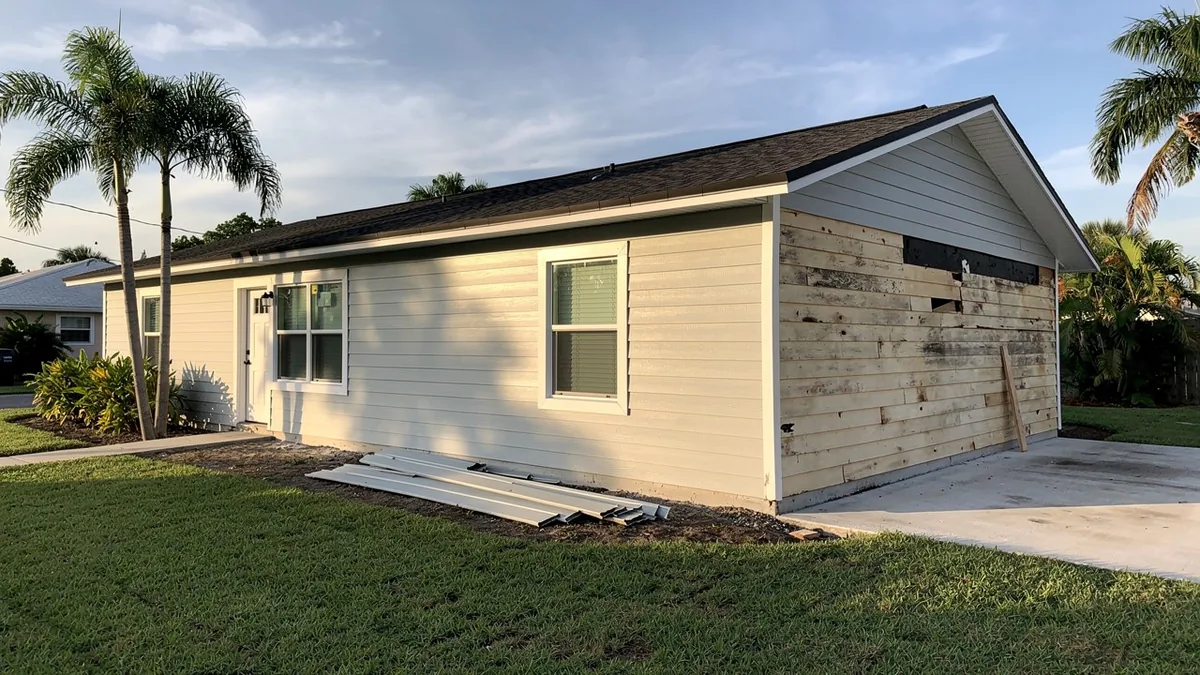
Two single-story homes with the same floor plan can get siding quotes thousands of dollars apart. That is not usually guesswork on the contractor's part. The price is built from a handful of measurable things: how much wall there is, what goes on it, what has to come off first and what turns up underneath. Knowing those pieces makes it much easier to read an estimate and compare one fairly against another.
Wall area, not floor area
Siding is priced by the wall surface it covers, and that has little to do with the square footage you see on a listing. A long, narrow ranch house has more exterior wall than a compact square one with the same living space. Gable ends add triangles of wall above the eaves. Windows and doors take some area away, though they add trim work in return.
Contractors often talk in squares, where one square is 100 square feet of wall. If you want a rough sense of your own number, measure each wall's length and height, multiply, add the gable triangles, and subtract the large openings. It will not replace a proper measurement, but it helps you check that two quotes are pricing the same house.
The material you choose
Material sets the baseline. National cost guides put installed vinyl siding at roughly $3–$12 per square foot and installed fiber cement at about $5–$14 per square foot, depending on the grade, profile and finish. Thicker vinyl, insulated panels, shingle and board-and-batten styles and factory-finished fiber cement sit toward the top of those national ranges. Basic profiles sit toward the bottom.
Both materials have to suit this area. Broward and Miami-Dade are inside the Florida Building Code's high-velocity hurricane zone, so the product and its fastening have to be approved for those conditions, which narrows the choice and can affect the price.
Trim, corners and openings
A plain rectangle with four corners and a few windows is quick to side. Every extra corner, bump-out, bay window or porch post adds cutting, flashing and trim. Window and door surrounds, corner boards, frieze boards under the eaves and the trim around vents, hose bibs and electrical fixtures all take time. Two homes with the same wall area can differ a great deal here, and this is often where quotes split apart.
Taking the old siding off
Most replacement jobs start with removing what is on the wall now. National figures put removal and disposal of old siding at about $1,000–$2,500 for a typical job, depending on how heavy the old material is and how much of it there is. Lightweight vinyl comes off quickly. Heavier materials and multiple layers take longer and cost more to haul away. Older homes can also have materials that need testing before anyone disturbs them.
What turns up underneath
This is the part no estimate can price exactly in advance. Once the siding is off, soft or rotted sheathing around windows, at the bottom of walls or under a leaking gutter has to be replaced before anything new goes on. A good estimate tells you how such repairs will be handled and priced, for example per sheet of sheathing, so a surprise does not turn into a dispute halfway through the job.
Water barrier, flashing and code details
New siding needs a sound water-resistive barrier behind it and proper flashing at every window, door and roof-to-wall joint. These parts are invisible once the job is done, which is exactly why a low quote sometimes leaves them out. Ask whether the price includes new barrier and flashing, and how the fastening will meet the wind requirements for this zone.
Why single-story homes are simpler
One story works in your favor. Most walls can be reached from ladders or low staging, there is less material to lift, and crews move around the house faster. Access still matters, though. Tight side yards, fences right against the house, dense planting or a pool deck along one wall can all slow the work. Clearing a path around the house before the crew arrives, and trimming back anything pressed against the walls, saves time that would otherwise show up on the bill.
Comparing two quotes fairly
Line the estimates up side by side and check that they describe the same job. A cheaper quote is only cheaper if it covers the same work.
- Do both measure roughly the same wall area?
- Is it the same product line, profile and thickness?
- Does each include tear-off, disposal, new water barrier and flashing?
- How is rotted sheathing priced if it is found?
- Are permits, trim, soffit and fascia included or listed separately?
Putting the numbers together
For a whole house, national cost guides put a typical siding project at about $8,000–$30,000. Those are national figures, not a local quote, and your price depends on your walls, your material and what is found during removal. The final number is set by an estimate after someone has measured and looked at the house.
If you live in Pinewood or nearby, our siding contractor page for Pinewood covers service in the area. For the full picture of a tear-off and new siding, see siding replacement, and if you are still choosing a material, read fiber cement vs vinyl for Florida homes.